Showing posts with label reading. Show all posts

Monday, April 16, 2012

Administrative Leave for What? You have got to be Kidding

Kallamis has been a reader of this blog for some time and often shares great comment and observations with the rest of us, in the comments section of the BMU blog.   As a general rule I do no not pass on a reader's comments in deference to their privacy.  But there are those times that a comment made here really does contain some interesting points or observations.  Oh an Kallamis said go for it! lol

Case in point, Kallamis brings this to our attention:
  • In March 2012, a middle school teacher of 14 year olds in South Carolina was placed on administrative leave for reading excerpts of Ender’s Game to his students, after a parent complained that the book was pornographic, primarily based on "curse words" in the text.  The parent also asked the local police to file criminal charges, which the police have declined to do.  The teacher had also read to the students from Devil’s Paintbox by Victoria McKernan and Curtain: Poirot’s Last Case by Agatha Christie.
Kallamis opinions - The World is Insane.

I am inclined to agree.  Thanks Kallamis
 

Monday, March 26, 2012

New Book Reader In the Past

I really enjoyed this article I came across in Boing Boing. The device you see in the graphic is from the April, 1935 issue of Everyday Science and Mechanics. In it we see what they envisioned as the future of machines for reading "electron" books. What I see is a technology that was used up until a few years ago, the microfiche machines. Also you can see the influences from the picture viewers popular a few years earlier. The technology to the best of my knowledge never made the transition to the consumer book field. But as you can see, it is based on tried and true technology.

The Retronaut via Boing Boing

Tuesday, September 21, 2010

Comment: Banned Book Week


I think that one of the most fundamental reasons I consider reading one of my major hobbies is the freedom I have enjoyed since I started reading in earnest way back in the 60s. Not that my reading habits changed all that much during that period, I still read mostly for entertainment, but what before was satisfied by comics now required a bit more meat. Mainly I suspect it was something to do with attention span. I wanted material that would take me away for longer periods of time.

My parents never really put limits on what I read. It wasn't until much later when it came to me that not being serious readers they may have never considered books anything more than what they were fundamentally. That very likely worked in my favor, for had I been told that I must read this, I would have looked upon reading as a chore.

So I spent my formative years and early adulthood exploring the trials of the dustbowl years, the fate of indentured or otherwise in the civil war years, Idealized Polynesian society, small town social / economic strife in a small new England town in the 60s, wild adventures along the Mississippi frightening political upheaval during the 30s and 40s. It was all open to me.

Then in the 70s I discover science and science fiction. Now the past present and the future were my playgrounds. I was free to read whatever I wanted....or so I thought.

Yes, I am talking about that horror called banned books. Dan brought me some pages this week to the September 2010 issue of the AARP Bulletin. On page 39 they list some of the books banned by American schools and libraries. Even this list is astounding and frightening. There is just something inherently ugly and evil about banning books. It should be so easy, if you choose to object to and not read something fine but what gives you the right to tell me that I must adhere to your choices.

I am not going to go through the whole list. Find a copy and read the article. It is truly unbelievable. But here are some of the books that I think are well within the venue of BMU.

Animal Farm George Orwell, 1945
1984 George Orwell, 1949
Brave New World Aldous Huxley 1932
Fahrenheit 451 Ray Bradbury 1954
A Clockwork Orange Anthony Burgess 1962
Slaughter House Five Kurt Vonnegut 1969

Some that might span the gap so to speak would be books like

Cujo, Stephen King 1981
James and the Giant Peach Roald Dahl 1961
Harry Potter books J.K. Rowlings 1997 - 2007
Lord of the Rings J.R.R. tolkien 1954

One of the most egregious occurrences has to be Bradbury's Fahrenheit 451 which according to the article Ballantine sanitized editions sold to schools from 1967 to 1973 and went so far as to SELL ONLY the sanitized editions from 1973 to 1979. You have to ask why would Mr. Bradbury
allow one of his most memorable novels be butchered? Ballantine carried out this campaign without telling or asking Mr. Bradbury! Now that takes a pair right there....

Stay vigilant. I can guarantee that no matter what your political or religious views, the books that you consider as your RIGHT to have own and read are on someone else's ban list. Before you take the easy route and believe that certain people should never have access to certain books, consider your most important book and have someone take it away from you and possibly imprison you for owning it. Don't say that it can't happen because it already has, countless times. If you can justify any banning of books then you are a breath away from agreeing with them all.

September 25th to October 2nd is the American Library Association's annual Banned Books Week

Monday, October 12, 2009

Review: The Windup Girl by Paolo Bacigalupi


The Windup Girl by Paolo Bacigalupi
359 pp HC
Published by Night Shade Books http://www.nightshadebooks.com/

Those readers who are familiar with Paolo's Hugo Nominated work "The Calorie Man" (which I truly suggest reading before Windup because it will make clear some of the otherwise cryptic references in the book) will instantly recognize the world of "The Windup Girl". The world of the Windup Girl is calorie starved. Plagues have decimated the worlds food supplies and petro-chemical are if not totally depleted are very scarce. In this world the "gene-ripper and calorie-men" are all that keep the world fed and supplied with energy but at great cost. Their power is held not by governments now but huge corporations that control grains for food and the various technologies to make energy. Power now is based around genetically engineered animals and mechanical devices storage devices much like batteries or engines but more in line with a watch's main spring than an internal combustion engine. The world's currency is now the calorie and the joule and the corporations guard them well. Wars are fought over control between different corporation for such control.

Into this mix we are introduced to "New People" or Windups. Genetically engineered from human and animal genes to be the perfect servant for areas where the native populations have declined seriously or the ultimate soldier. Toys for the ultra rich.

Emiko is the windup in our story. Abandoned in future Bangkok. Emiko is forced to hide amongst the very dregs of humanity used as a plaything by anyone that can manage the price set by her "patron".

In Windup Girl we are introduced to the various factions that are tasked with keeping Bangkok dry, fed and energized, plus fighting each other for control. Above it all are the mysterious corporations manipulating and spying for the ultimate prize.....plague free food stuffs that could bring untold wealth.

Paolo has done a great job of expanding on the earlier shorter works. His future Bangkok lives and breathes. You can feel the oppressive heat, smell the stench of animals kept in close quarters. The noise and the strangeness.

Mix in a healthy dose of political intrigue (which to be honest I usually run screaming from) and you have a book that you just can not put down. You feel Emiko's conflict. Her every fiber is designed to serve without question but she is tortured by the conflict to be more than a toy but to be someone in control and to have others like herself, a group to which she can belong. The mysterious Anderson who seems to be very much a dangerous company man but is totally undone by the likes of Emiko. Kanya who serves two masters to her undying shame and other equally realized characters. The milieu alone makes the books worthwhile, but to have real people woven into the tapestry is wonderful. Don't get me wrong, there are cardboard cut-outs, but they are there mostly to set the tone not be the focus.

If you found the Calorie Man or the collection Pump 6 as entertaining as I did then you will find The Windup Girl immensely entertaining.


Sunday, January 13, 2008

TOC: The Year's Best Science Fiction #25

Thanks to the SF Signals' blog:

Gardner Dozois has posted the table of contents for The Year's Best Science Fiction: Twenty-Fifth Annual Collection:

  1. "Finisterra" by David Moles
  2. "Lighting Out" by Ken Macleod
  3. "The Ocean Is A Snowflake Four Billion Miles Away" by John Barnes
  4. "Saving Tiamaat" by Gweyneth Jones
  5. "Of Late I Dreamt Of Venus" by James Van Pelt
  6. "Verthandi's Ring" by Ian Mcdonald
  7. "Sea Change" by Una Mccormack
  8. "The Sky Is Large and the Earth Is Small" by Chris Roberson
  9. "Glory" by Greg Egan
  10. "Against The Current" by Robert Silverberg
  11. "Alien Archeology" by Neal Asher
  12. "The Merchant and the Alchemist's Gate" by Ted Chiang
  13. "Beyond The Wall" by Justin Stanchfield
  14. "Kiosk" by Bruce Sterling
  15. "Last Contact" by Stephen Baxter
  16. "The Sledge-Maker's Daughter" by Alastair Reynolds
  17. "Sanjeev and Robotwallah" by Ian Mcdonald
  18. "The Skysailor's Tale" by Michael Swanwick
  19. "Of Love and Other Monsters" by Vandana Singh
  20. "Steve Fever" by Greg Egan
  21. "Hellfire at Twilight" by Kage Baker
  22. "The Immortals of Atlantis" by Brian Stableford
  23. "Nothing Personal" by Pat Cadigan
  24. "Tideline" by Elizabeth Bear
  25. "The Accord" by Keith Brooke
  26. "Laws of Survival" by Nancy Kress
  27. "The Mists of Time" by Tom Purdom
  28. "Craters" by Kristine Kathryn Rusch
  29. "The Prophet of Flores" by Ted Kosmatka
  30. "Stray" by Benjamin Rosenbaum & David Ackert
  31. "Roxie" by Robert Reed
  32. "Dark Heaven" by Gregory Benford

Wednesday, December 19, 2007

Review: Wastelands, Stories of the Apocalypse

Title: Wastelands: Stories of the Apocalypse
Editor: John Joseph Adams
Trade Paperback
ISBN : 1-59780-105-4
Pages: 350 Price: $15.95
Publisher: Night Shade Books

I know if your like me you view "theme" books with a bit of skepticism. Assembling a collection of any size with only one "type" of story can be daunting. I have often found many of these types of books containing one or a few really top notch stories and the rest relegated to filler. Collections like Ellison's Dangerous Visions is a shining example of how to do it right. Is Wastelands in that league? Not quite, but DAMN close. The stories are not as "dangerous" as DV and it's no where near the size of DVs. However, don't take me wrong, the tales in Wastelands are the crème de la crème of this genre and for that matter science fiction as a whole. Often the editors choice of covers is their attempt to put their best foot forward, so by looking at just the cover of Wastelands, one might suspect that the author is attempting to snare you on name recognition alone. Believe me, this is not the case. Yes, notable names all, however the tales between those names are every bit as strong. A good example is one of my favorites in this book and appearances elsewhere - The People of Sand and Slag, by Paolo Bacigalupi, or better called a boy and his dog and an appetizer. An absolutely stunning story of the far future and an equal to any of the "names" on the front. The whole book is like this. One retina blasting mind numbing yarn after another. King's story alone is worth the price of the book. (a kind of sideways retelling of Flowers for Algernon) The only suggestion is that you read each story straight through and put the book down and walk away for a time. Each story deserves to be considered on it's own merit. The subject matter and the tales themselves are often so strong and different that you very well could miss the high point of one while recovering from the blast received from the previous reading. Wastelands is well worth the cost. The author has done his job in exemplary manner. Wastelands would make an excellent gift for the jaded science fiction fan.


Monday, November 19, 2007

The Best Science Fiction Books of the Year

Michael Berry at the San Francisco Chronicle has put together a list of what he considers the best Science Fiction books of the year. It's a very interesting list with a great mix of authors. Here is the list, for Michael's reviews click here or on the article title to go to the complete story in the Chronicle


Michael Berry

The Sons of Heaven By Kage Baker
One for Sorrow By Christopher Barzak
Territory By Emma Bull
20th Century Ghosts By Joe Hill
Un Lun Dun By China Mieville
Empire of Ivory By Naomi Novik
The Name of the Wind By Patrick Rothfuss
Bad Monkeys By Matt Ruff
The Terror By Dan Simmons
Halting State By Charles Stross

post from SFSignals.com

Friday, July 13, 2007

AS Fate Decrees by Denyse Bridger 8/15/07

Announcing "As Fate Decrees"

EDGE Science Fiction and Fantasy Publishing would like to announce "As Fate Decrees" by Denysé Bridger which arrives August 15th 2007.

Denysé Bridger is an award winning Canadian author whose writing will leave the reader wanting more. She is able to captivate the reader with each page and image as she sets up her main character, Amarantha, on a journey through challenges only found in myths and legends of the ancient Greeks.


ABOUT AS FATE DECREES

The gods of ancient Greece must find a mortal champion to defend their fate.


Wednesday, July 04, 2007

Fred Saberhagen RIP


Locus Magazine online reports:

SF and fantasy writer Fred Saberhagen died June 29, 2007, at the age of 77. He began publishing in 1961 with short stories in Galaxy and If magazines, and published collection Berserker in 1967, first in a series about interstellar killing machines programmed to destroy all life. Saberhagen's 60+ books also included the Empire of the East sequence, beginning with The Broken Lands (1968), the Dracula sequence, beginning with The Dracula Tape (1975), and two books co-written with Roger Zelazny, Coils (1981) and The Black Throne (1990). His last book was Ardneh's Sword (Tor, 2006).

• The family will announce a date for a Memorial Celebration later this year.� Donations would be appreciated to Doctors without Borders, Catholic Relief, SFWA Emergency Medical Fund, and John 23rd Catholic Church in Albuquerque.

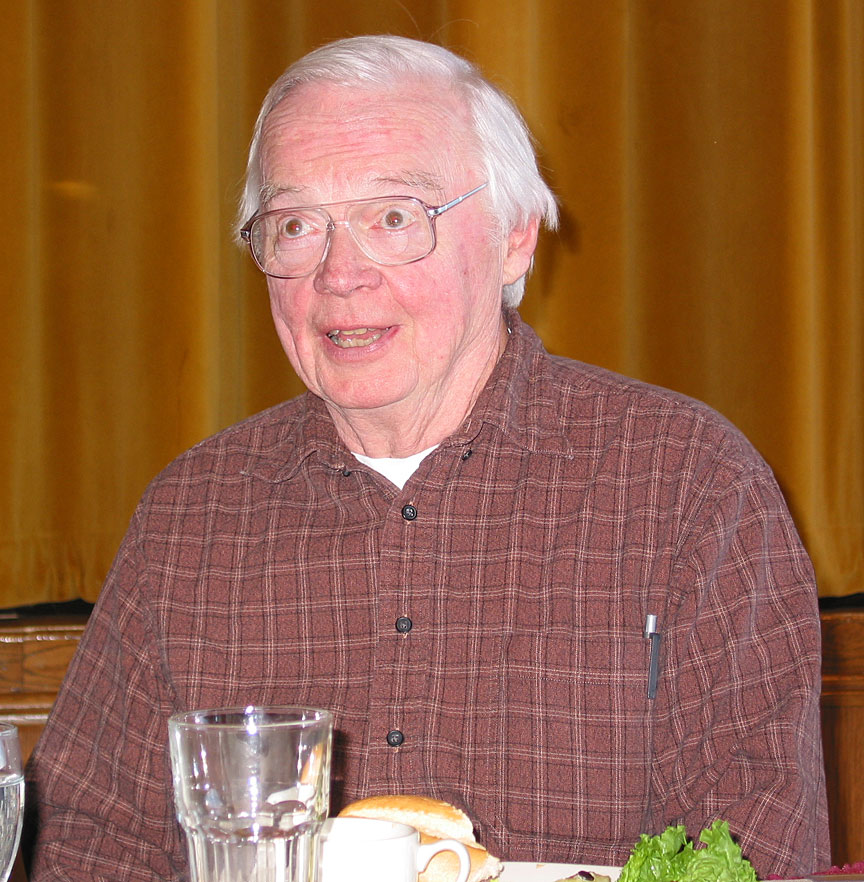
Photo by Scott Edelman)

Friday, December 15, 2006

The 34 Writers on Gutenberg's Science Fiction Bookshelf

I have been seeing new authors added to Project Gutenberg almost every day. I just found out that there are now 34 authors of science fiction available there. It seems that, Project Gutenberg has set up a special "science fiction book shelf" area. Check it out. Some really good stuff available.

  1. Edwin Abbott
  2. John Jacob Astor
  3. Edward Bellamy
  4. Jesse F. Bone (Jesse Franklin)
  5. Marion Zimmer Bradley
  6. Edgar Rice Burroughs
  7. John W. Campbell
  8. Terry Carr
  9. Michael D. Cooper [pseudonym]
  10. Ray Cummings
  11. Lester Del Rey
  12. Cory Doctorow
  13. Sir Arthur Conan Doyle
  14. Charles Dye
  15. E. Everett Evans (Edward Everett)
  16. Homer Eon Flint
  17. Harold Leland Goodwin
  18. Charles John Cutcliffe Wright Hyne
  19. Murray Leinster (William Fitzgerald Jenkins)
  20. David Lindsay
  21. A.E. Merritt
  22. Meyer Moldeven
  23. John Munro
  24. Andre Norton
  25. Alan E. Nourse
  26. H. Beam Piper
  27. Rick Raphael
  28. Carey Rockwell
  29. Garrett P. Serviss (Garrett Putman)
  30. Robert Sheckley
  31. E. E. Smith (Edward Elmer)
  32. George Oliver Smith
  33. Jules Verne
  34. H. G. Wells